Capitalism, Class, Economics, Work

A Novel That Makes Socialists

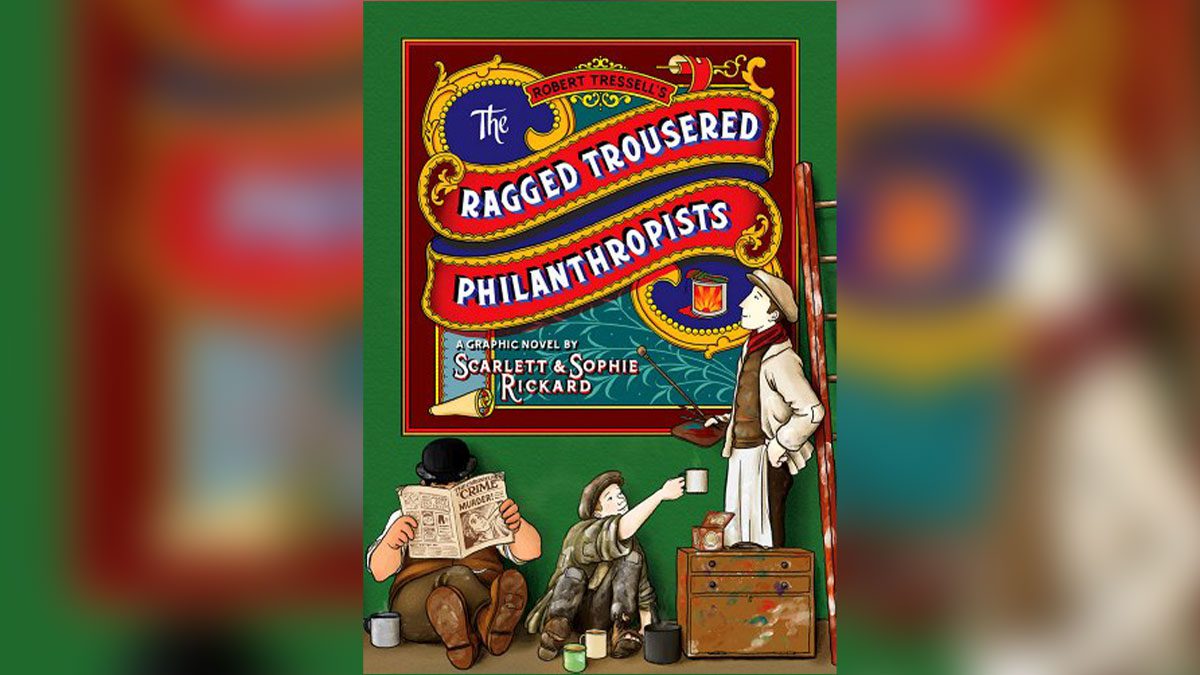
Robert Tressell’s The Ragged-Trousered Philanthropists is a book that has made (or helped make) many socialists, at least in Britain. It has long been popular in our companion party, …

by Stephen Shenfield

Published:

Updated:

reading-time

Robert Tressell’s The Ragged-Trousered Philanthropists is a book that has made (or helped make) many socialists, at least in Britain. It has long been popular in our companion party, the Socialist Party of Great Britain. Set in a seaside town on England’s south coast – Hastings, thinly disguised as Mugsborough — it is a story of daily working class life in the early 20th century, interspersed with dramatized explanations of how capitalism works and how socialism could work better. 

To a considerable extent the book is about the author’s own life, for Owen, the central character, like Tressel (pen name of Robert Noonan), is a house painter and socialist who is always trying to enlighten his fellow workers. Tressel died penniless of TB in 1911 and his book was first published in 1914 thanks to the efforts of his daughter.

Some may be puzzled by the book’s title. Trousers means pantsPhilanthropist (Greek for ‘lover of mankind’) usually means a capitalist who gives money to supposedly worthy causes. The true philanthropists, argues Owen, are the workers who beg only to continue working for the profit of their employers. 

While most of the characters in the story are men, there are moving sketches of Owen’s family life, such as an episode in which his wife is seduced by their lodger. On one occasion he sees a young worker being bullied by his boss and foresees, but is helpless to avert, the misery in store for his own sensitive son.

Many editions of The Ragged-Trousered Philanthropists are on sale. Or you can listen to the Audiobook that LibriVox has made available in four parts on Youtube. There are several other more or less relevant videos on Youtube. Of particular interest is a talk by the actor and musician Ricky Tomlinson. He too used to be in the building trades – a plasterer. He read The Ragged-Trousered Philanthropists while in prison (it was given him by the warden!) — The Book That Made Me.    

Photo of author
I grew up in Muswell Hill, north London, and joined the Socialist Party of Great Britain at age 16. After studying mathematics and statistics, I worked as a government statistician in the 1970s before entering Soviet Studies at the University of Birmingham. I was active in the nuclear disarmament movement. In 1989 I moved with my family to Providence, Rhode Island, USA to take up a position on the faculty of Brown University, where I taught International Relations. After leaving Brown in 2000, I worked mainly as a translator from Russian. I rejoined the World Socialist Movement about 2005 and am currently general secretary of the World Socialist Party of the United States. I have written two books: The Nuclear Predicament: Explorations in Soviet Ideology (Routledge, 1987) and Russian Fascism: Traditions, Tendencies, Movements (M.E. Sharpe, 2001) and more articles, papers, and book chapters that I care to recall.

Related Articles

Capitalism, Economics, Environment, Work

The Strange Existence of Las Vegas

What sense does it make for a big city to exist in the middle of a scorching desert? What contribution does Las Vegas make to human wellbeing?

reading-time

Class, Economics, News, Politics

India: Turning a Deaf Ear to Misery and Despair

In a guest post from India, Pramod Ranjan of Assam Central University reflects on the new annual budget of the Indian government and how it ignores the plight of the country's poor in the wake of Covid-19.

reading-time

Capitalism, Class, Economics, News, Politics, Uncategorized

The ‘Democratic Socialism’ of Bernie Sanders

To a socialist Senator Bernie Sanders is far and away the least distasteful of the current contenders for the American presidency. He seems decent and sincere. Although ...

reading-time

Capitalism, Environment

Anton Pannekoek: The Destruction of Nature

A recently rediscovered essay by an early 20th century socialist theorist demonstrates that ecological thinking has always been part of the socialist worldview.

reading-time

Leave a Comment